 Marietta Gutter Specialists
Smyrna Gutters, Ranch to Townhome
A 1950s ranch under an old oak and a new three-story townhome need different things from their gutters. A guide to both.
Call (770) 678-7045Two very different housing stocks
Smyrna covers about 15 square miles and two kinds of houses that need very different things from their gutters: the low postwar ranches that went up around Belmont Hills in the 1950s and 1960s, and the townhomes and infill houses built during the city's more recent redevelopment.
| 1950s–60s ranch | New townhome or infill house | |
|---|---|---|
| Roofline | Long, low, simple | Tall, narrow, several stories |
| Typical gutter issue | Aging gutters, rotted fascia, heavy leaf load | Tight side yards, shared drainage paths |
| Trees | Large mature oaks | Fewer, younger trees |
| Usually needs | Replacement and guards | Careful downspout routing |
The postwar ranch
When the Belmont Hills shopping center opened in November 1954, the Cobb Chamber was forecasting 1,900 new homes in the Smyrna area by the end of 1955. Many of those ranches are still standing, often under oaks that have grown huge in the seventy years since. Their gutters are usually on at least their second or third generation, and the long, low eaves make cleaning easy compared with a two-story house — but the leaf load from mature oaks is heavy, and fascia that has been soaked by decades of overflow is common. On these houses the job is usually replacement with new fascia where needed, and often guards.
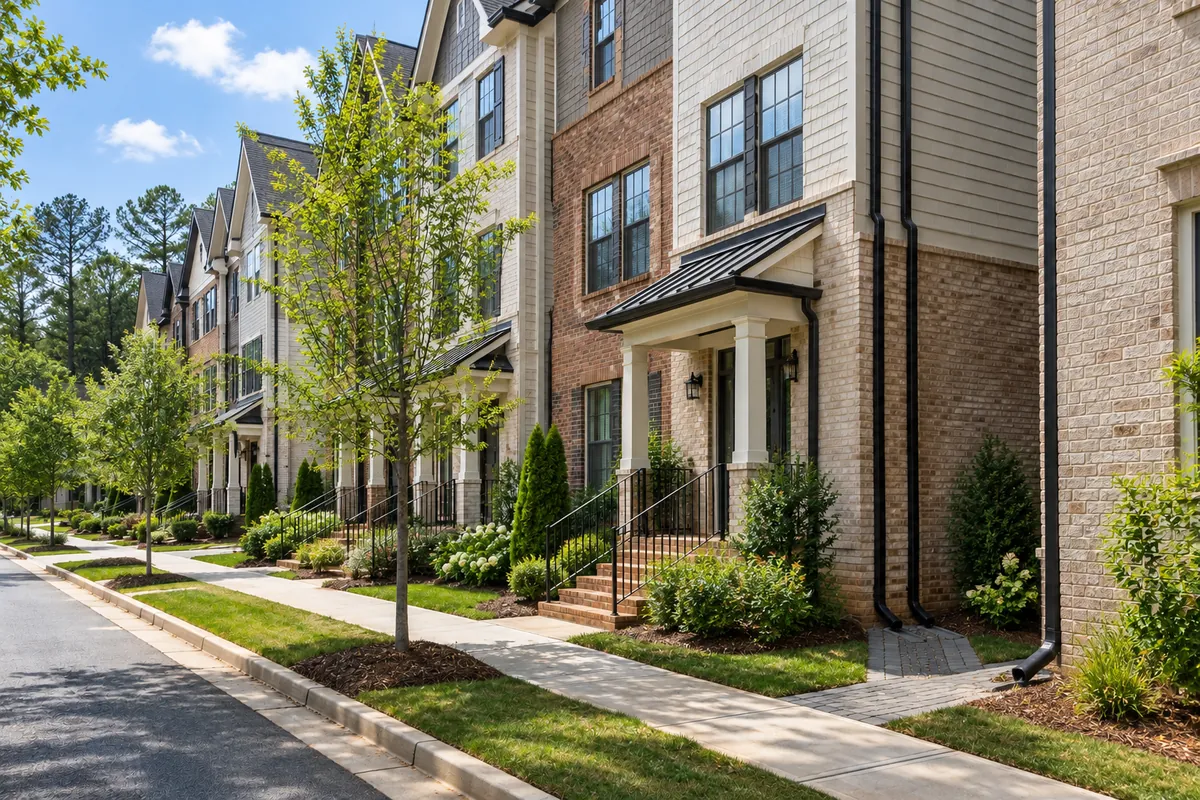
The new townhome
Smyrna's redevelopment brought a different kind of house: tall, narrow and close together. The downtown Market Village alone includes 16 townhomes alongside shops and offices. For gutters, the issue on these homes is less debris than drainage — tall roofs dropping a lot of water into narrow side yards, with little room to carry it away. Where each downspout lets go, and whether it ends up at a neighbor's foundation, matters more than gutter size. The downspouts and drainage page covers the options.
Trees that stay put
Smyrna protects its canopy. Tree removals are governed by Chapter 106 of the city code and handled through the City Arborist Division, which aims to preserve as many healthy, mature trees as possible and even offers private tree assessments. For homeowners, that means the oak over the roof is probably staying, along with the leaves, acorns and pollen it drops. Guards are the realistic answer on the runs under the biggest trees.
Down by Nickajack Creek
Smyrna's older country edge survives along Nickajack Creek at Concord Covered Bridge, built in 1872 beside Ruff's Mill, on a narrow rise bordered on three sides by the creek. The city runs a stormwater program under its state stormwater permit, and homes on the slopes above the creek corridors benefit from the same rule as anywhere on clay: get roof water away from the house and out where it can soak in.
Ranch under big oaks, or a new townhome?
A local provider can price the right fix for either.